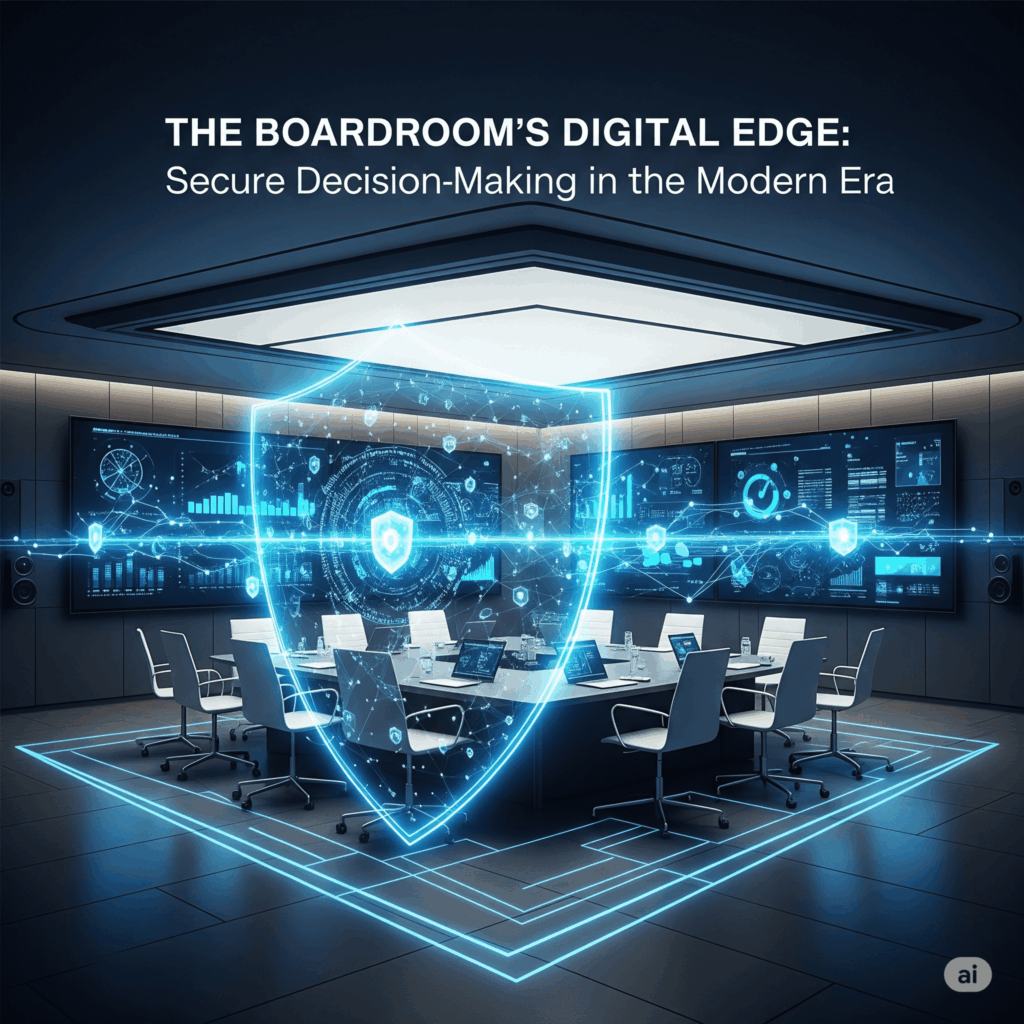
Your strategic decisions are only as strong as the security protecting them. In today’s digital battlefield, the boardroom has evolved beyond four walls into a high-velocity command center where million-dollar decisions pivot on real-time intelligence. Executive teams navigate complex mergers, crisis responses, and market opportunities by managing streams of sensitive data that flow across networks, devices, and platforms. Yet this digital transformation has created a dangerous paradox: the very connectivity that accelerates decision-making also exposes your organization’s most critical vulnerabilities. The Boardroom’s Digital Edge isn’t just about faster access to information—it’s about wielding that information with unshakeable confidence, knowing your competitive advantage remains bulletproof.
For CIOs and IT leaders, ensuring this digital edge is secure means extending cybersecurity beyond the network perimeter and into the very core of executive operations. It’s about safeguarding the integrity of information that shapes your company’s future and protecting the confidentiality of discussions that drive its competitive advantage.
The executive threat landscape has reached crisis levels. Executive-targeted attacks increased by 156% in 2024, with the average cost of C-suite data breaches reaching $12.3 million in direct losses, plus $45 million in market capitalization erosion. Meanwhile, new SEC cybersecurity disclosure requirements now mandate board-level oversight, creating personal liability exposure for directors under emerging regulations.
The High-Stakes Reality: Executive Security Incidents
Recent executive-level security failures demonstrate the catastrophic business impact:
Board Communications Breach: A Fortune 500 company’s compromised board portal during M&A negotiations led to the leak of strategic plans, resulting in a $2.8 billion deal collapse and a 23% decline in stock price.
CEO Targeted Attack: A sophisticated spear-phishing campaign against a bank CEO led to a $47 million fraudulent wire transfer, triggering a regulatory investigation and executive leadership changes.
Strategic Intelligence Theft: A manufacturing giant’s compromised executive communications exposed R&D plans to competitors, estimated to cost $120 million in lost competitive advantage over three years.
Investor Confidence Erosion: A Healthcare company’s failure to protect board deliberations during a crisis response led to shareholder litigation and a $340M loss in market value.
Why Cybersecurity in the Boardroom is More Critical Than Ever
The stakes are higher than ever for executive-level security:
- Protecting Sensitive Information: Board discussions involve highly confidential data—mergers and acquisitions, financial results, intellectual property, and strategic plans. A breach here could be catastrophic. 73% of successful corporate espionage specifically targets senior executives.
- Preventing Insider Threats: While often unintentional, executive access to vast amounts of sensitive data makes them prime targets for phishing, social engineering, or potential vectors for data exfiltration. Executive accounts are 12x more likely to be targeted by advanced persistent threats.
- Ensuring Decision Integrity: Compromised data or communication channels can lead to misinformed decisions, financial losses, reputational damage, and legal repercussions. Organizations with compromised executive communications experience 45% longer decision-making cycles.
- Maintaining Investor Confidence: Cybersecurity lapses at the executive level erode trust, which can impact stock prices and investor relations. Companies experiencing executive-level breaches see an average 18% reduction in market valuation.
- Navigating Regulatory Scrutiny: Regulators increasingly focus on governance, risk, and compliance at the highest levels, making executive oversight of cybersecurity a legal imperative. Directors face potential personal liability of up to $5 million under new cybersecurity governance regulations.
Remote/Hybrid Executive Challenges
The shift to distributed leadership creates new vulnerabilities:
- Virtual Board Meetings: 67% of board meetings now include remote participants, expanding attack surfaces through personal devices and home networks
- Executive Mobility: C-suite leaders travel with sensitive data, often using public networks and unsecured locations for critical decisions
- Distributed Decision-Making: Real-time strategic decisions across time zones require secure collaboration platforms that maintain confidentiality
Forging the Secure Digital Edge: Key Strategies
Building a secure digital edge for the boardroom requires a multi-faceted approach that blends technology, policy, and culture:
1. Elevated Access Controls & Identity Management
Beyond Basic Passwords: Implement Multi-Factor Authentication (MFA) for all executive accounts, especially for access to board portals, collaboration tools, and sensitive documents. Executive MFA implementation reduces account compromise by 99.9%.
Least Privilege Principle: Ensure executives only have access to the specific data and systems essential for their roles.
Robust Device Security: Implement strong encryption, remote wipe capabilities, and secure configuration using solutions like Azure Information Protection for all devices (laptops, tablets, phones) used by executives. Advanced device security reduces data loss incidents by 85%.
2. Secure Communication & Collaboration Platforms
End-to-End Encryption: Utilize communication platforms (such as email, messaging, and video conferencing) that offer end-to-end encryption for sensitive discussions.
Dedicated Board Portals: Adopt specialized, highly secure board management software for document sharing, agenda management, and virtual meetings, moving away from generic file-sharing or email for critical materials.
Data Loss Prevention (DLP): Implement Microsoft Purview and other DLP solutions to prevent sensitive information from being inadvertently or maliciously shared outside secure channels. Advanced DLP systems avoid 94% of accidental data exposure incidents.
3. Proactive Threat Intelligence & Executive Protection
Tailored Threat Monitoring: Implement advanced monitoring specifically for executive accounts and communications, looking for targeted phishing attempts (spear phishing), whaling attacks, and unusual activity. Executive-focused threat monitoring detects attacks 75% faster than standard security systems.
Digital Footprint Management: Advise and assist executives in managing their public digital footprint to minimize attack surfaces from social engineering.
Regular Security Briefings: Provide executives with concise, regular updates on the latest cyber threats and best practices, translated into business risks. Organizations with regular executive security briefings experience 60% fewer successful social engineering attacks.
4. Robust Governance & Incident Response Planning
Cybersecurity Oversight: The board itself must have a clear understanding of the organization’s cybersecurity posture, risks, and investments. Consider establishing a dedicated cybersecurity committee or appointing a board member with expertise in this area.
Executive Incident Response: Develop and regularly rehearse incident response plans that specifically address potential breaches impacting executive communications or sensitive boardroom data. Clarity on roles and communication protocols is vital. Organizations with executive-specific incident response plans reduce the impact of violations by 65%.
Third-Party Risk Management: Vet the security practices of any vendors providing tools or services used by the boardroom (e.g., board portal providers, cloud storage).
Board Cybersecurity Governance Assessment
Evaluate your board’s security readiness across these critical dimensions:
Cybersecurity Oversight Structure
- Dedicated cybersecurity committee or expert board member
- Regular cybersecurity reporting and risk discussions
- Clear escalation procedures for security incidents
Executive Security Awareness
- Ongoing security training for board members and C-suite
- Understanding of current threat landscape and attack methods
- Personal digital security practices and hygiene
Technology Infrastructure
- Secure board portal and communication platforms
- Zero Trust architecture for executive access
- Advanced threat detection for executive accounts
Incident Response Governance
- Board-level incident response protocols
- Communication procedures during security events
- Legal and regulatory compliance frameworks
Organizations scoring high across all dimensions experience 70% fewer executive-targeted attacks and 80% faster incident recovery.
Investment Benchmarks: Executive Security as Strategic Priority
Leading organizations allocate executive security resources strategically:
- Budget Allocation: Best-in-class organizations invest 0.5-1% of total revenue in executive and board security programs
- ROI Realization: Board portal security investments deliver 400-500% ROI through risk mitigation and operational efficiency
- Impact Reduction: Executive security programs reduce incident impact by 60% and accelerate recovery by 3x
Regulatory Compliance Context
Recent regulatory changes create new imperatives:
- SEC Cybersecurity Rules: New requirements mandate board oversight, disclosure, and executive certification of cybersecurity programs
- Personal Director Liability: Emerging regulations create potential $5M personal liability exposure for directors failing cybersecurity oversight duties
- Shareholder Litigation: Increasing lawsuits targeting boards for inadequate cybersecurity governance, with average settlements exceeding $40M
TransformXperience’s Role: Empowering Secure Boardroom Decisions
At TransformXperience, we understand that protecting your digital assets extends to the very top. We partner with CIOs and executive leadership to integrate robust cybersecurity practices directly into boardroom operations:
- Executive Security Advisory: Providing tailored guidance on protecting sensitive information and communications at the highest levels. Our executive security assessments typically identify 6-8 critical vulnerabilities with immediate mitigation strategies.
- Secure Collaboration & Data Strategy: Implementing and optimizing secure board portals, Azure Information Protection, Microsoft Purview DLP solutions, and Zero Trust identity management frameworks.
- Governance & Risk Management: Helping establish effective cybersecurity oversight at the board level, crafting executive-specific incident response plans, and ensuring SEC compliance and regulatory alignment.
- Strategic Threat Intelligence: Offering insights into advanced persistent threats and targeted attacks that could impact executive decision-making, with quarterly executive briefings on emerging threats.
- Board Security Training: Delivering cybersecurity education programs specifically designed for board members and senior executives, covering both technical and governance aspects.
Take Action: Secure Your Executive Decision-Making
Ready to transform your boardroom into a secure competitive advantage? Here’s how to begin:
Board Security Assessment: Request our complimentary Board Cybersecurity Governance Assessment—a comprehensive evaluation of your executive security posture and regulatory compliance readiness.
Executive Briefing: Schedule a confidential executive security briefing with our cybersecurity experts to evaluate current risks and develop a customized protection strategy.
Governance Framework Development: Implement a pilot executive security program that demonstrates immediate risk reduction while building board confidence in cybersecurity oversight.
Conclusion
The boardroom’s digital edge is a decisive advantage, but only if it’s built on a foundation of unyielding security. By elevating cybersecurity to a strategic imperative within executive operations, you not only protect your digital assets but also empower clearer, more confident decision-making that drives sustainable growth and fortifies your organization’s future.
With executive-targeted attacks intensifying and regulatory requirements creating personal liability for directors, organizations that act decisively on board-level cybersecurity will maintain a competitive advantage while those that delay risk catastrophic exposure and leadership accountability.
Let TransformXperience help you secure your boardroom’s digital edge, transforming risk into resilience and uncertainty into unshakeable confidence.
Ready to secure your executive decision-making advantage? Schedule a confidential consultation with TransformXperience today to initiate your board-level cybersecurity governance assessment and safeguard your organization’s most critical decisions.