Introduction:
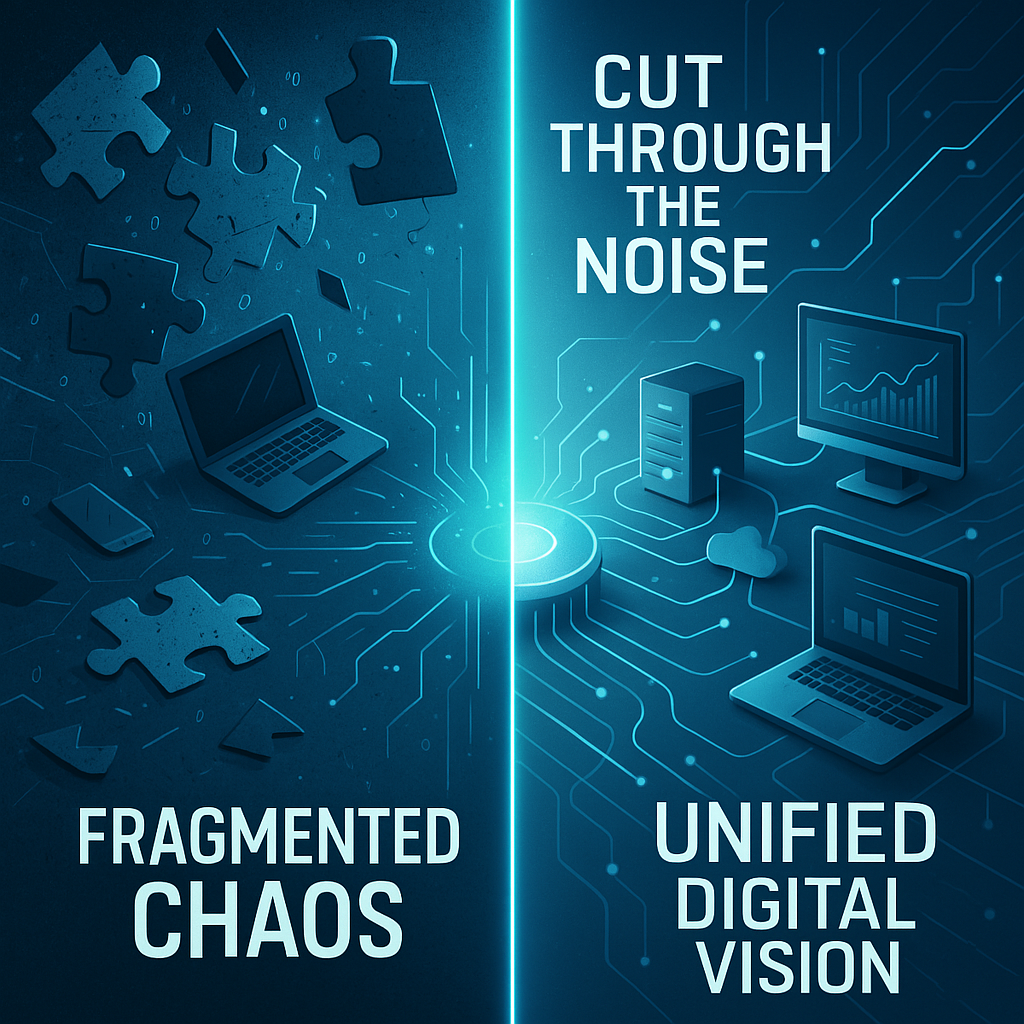
In the modern enterprise, “digital transformation” is no longer a choice; it’s imperative for survival and growth. Yet, for many CIOs and IT leaders, the reality is often less transformative and more fragmented. Organizations frequently launch digital initiatives in silos – a new AI tool here, a cloud migration there, an IoT pilot somewhere else – without a cohesive strategy. This scattershot approach leads to inefficiencies, duplicated efforts, wasted investments, and a significant lack of clarity.
The true challenge for the C-suite, particularly the CIO, is to move beyond these fragmented efforts and orchestrate a unified digital vision that aligns every technological stride with overarching business objectives. This isn’t just about implementing new tech; it’s about fundamentally reshaping how technology serves the enterprise to drive competitive advantage and sustainable growth.
The Peril of Fragmentation: Why a Unified Vision is Non-Negotiable
Consider the common pitfalls of a disjointed digital strategy:
- Redundant Investments: Different departments unknowingly purchasing similar tools or developing parallel capabilities.
- Data Inconsistencies: Information trapped in disparate systems, leading to a fragmented view of customers, operations, and markets.
- Operational Inefficiencies: The lack of integration leads to manual handoffs, process bottlenecks, and delayed execution.
- Security Gaps: A patchwork of systems increases the attack surface and complicates compliance efforts (e.g., Data Loss Prevention becomes harder to manage).
- Stakeholder Frustration: Business units become frustrated when IT can’t deliver integrated solutions or articulate a clear technological roadmap.
- Stunted Innovation: Without a clear direction, true, transformative innovation becomes haphazard rather than systematic.
These challenges highlight that a unified digital vision isn’t merely a strategic ideal; it’s a critical mechanism for risk mitigation and maximizing ROI on digital investments.
The CIO’s Mandate: Crafting the Unified Blueprint
Building a unified digital vision requires strategic leadership and a methodical approach. Here’s TransformXperience’s blueprint for orchestration:
- Start with the Business “Why”: Aligning Technology to Enterprise Strategy
- Action: Begin by deeply understanding the organization’s overarching business goals (e.g., market expansion, customer experience enhancement, cost reduction, new product development).
- Guidance: Every technology initiative must clearly articulate how it contributes to these strategic objectives. This isn’t about fitting tech into the business; it’s about enabling the business through tech. For the C-suite, this means connecting digital investments directly to the P&L and strategic growth narratives.
- Break Down Silos: Fostering Cross-Functional Collaboration & Governance
- Action: Establish cross-functional steering committees and working groups that bring together leaders from IT, operations, finance, marketing, and sales.
- Guidance: Implement robust program governance that transcends individual projects. This means defining clear roles, responsibilities, decision-making authorities, and communication protocols. TransformXperience helps establish and rebuild IT PMO structures that drive cross-functional alignment, ensuring all teams are marching to the same drumbeat, especially in high-risk, multi-million-dollar transformations.
- Establish a Foundational Data Strategy:
- Action: Prioritize the development of a unified enterprise data strategy. This involves identifying critical data assets, establishing clear data governance policies (MDM, data quality, data cleansing), and planning for integrated data platforms (e.g., data warehousing, data lakes).
- Guidance: Data is the common language of digital transformation. A unified vision relies on data that is consistent, accessible, and trustworthy across all systems. This provides the intelligence needed for AI/ML initiatives and informs strategic decision-making.
- Embrace Modular & Scalable Architecture (e.g., Cloud Enablement):
- Action: Adopt flexible, modular architectures (such as microservices) and leverage cloud technologies (e.g., Azure Cloud solutions) that enable rapid integration and scalability.
- Guidance: A unified vision doesn’t mean a monolithic system. It means interconnected components that can adapt independently. This approach helps managers implement new solutions more efficiently and allows practitioners to build on a consistent foundation.
- Cultivate a Culture of Change and Continuous Iteration:
- Action: Recognize that digital transformation is an ongoing journey, not a destination. Foster a culture that embraces change, encourages experimentation, and learns from failures.
- Guidance: Employ Agile methodologies (SAFe, SCRUM) at scale, allowing for iterative development and continuous feedback. This approach helps overcome resistance to change by involving stakeholders throughout the process and demonstrating incremental value.
TransformXperience: Your Partner in Orchestration
At TransformXperience, we understand the complexities of transitioning from a fragmented IT landscape to a unified digital powerhouse. We partner with CIOs and IT leadership to:
- Define and operationalize a clear digital vision: We work closely with your C-suite to align technology initiatives with your core business strategy, ensuring every investment contributes to measurable outcomes.
- Build robust governance frameworks: We establish and rebuild IT PMO structures, define SOPs, and implement controls that ensure your high-risk, multi-million-dollar programs are executed with precision and transparency.
- Integrate disparate systems and teams: Our expertise in cross-functional program management and integration ensures that your digital efforts work in harmony, maximizing efficiency and minimizing redundancy.
- Accelerate time-to-value: By leveraging our experience in AI/ML, cloud, and process automation, we help you implement strategic solutions that deliver tangible business benefits quickly and securely.
Conclusion:
The journey from fragmented IT to a unified digital vision is difficult but vital. It needs a CIO with a strategic outlook, a dedication to teamwork, and the right partner to lead the coordination. By emphasizing business alignment, strong governance, integrated data, and adaptable architecture, you can turn your organization into a connected, flexible, and genuinely digitally empowered enterprise, ready to take advantage of future opportunities.