By TransformXperience Team
You’ve seen the headlines: “Project X is 3 months behind schedule.” Or, “Program Y has just requested another 15% budget increase.” For PMO leaders and executives, these announcements are more than just frustrating; they’re a signal of deeply rooted inefficiencies that silently erode your bottom line and derail strategic goals.
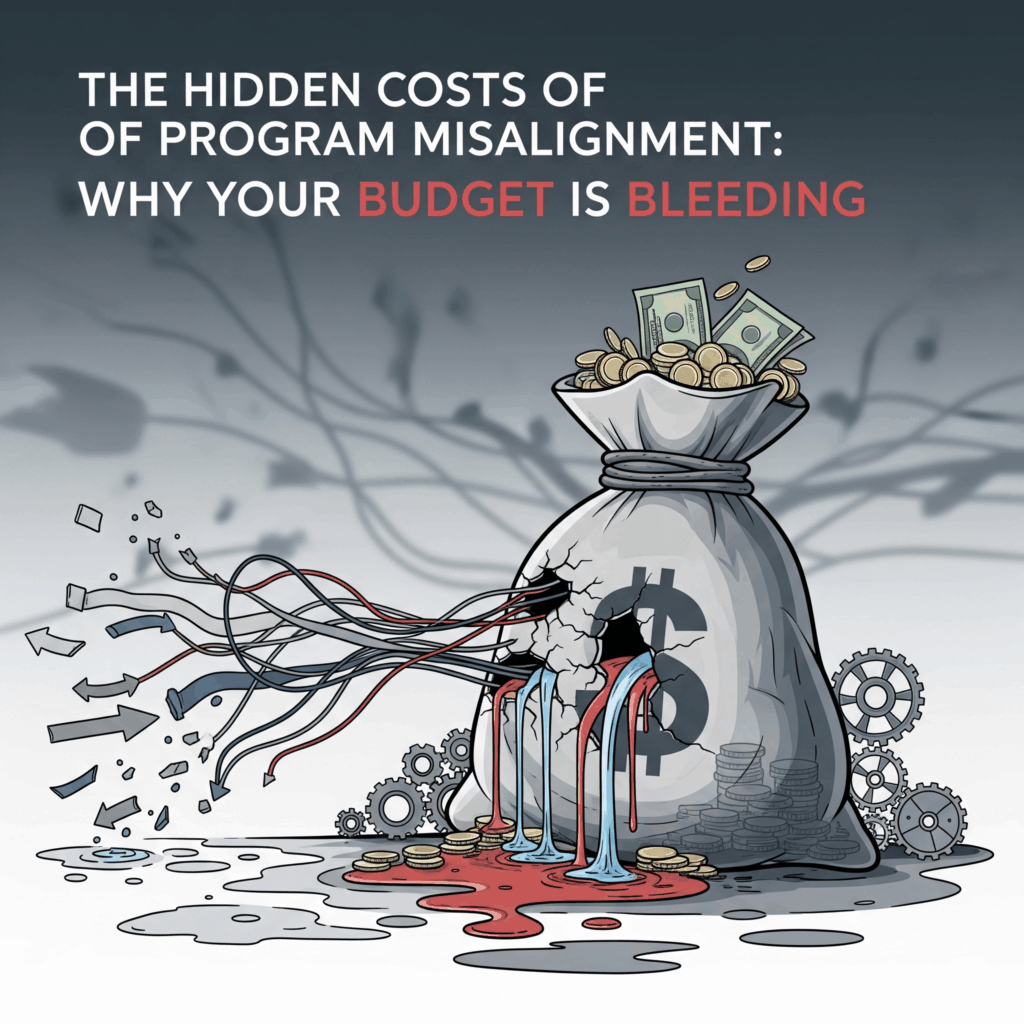
While “over budget” and “behind schedule” are the visible symptoms, the true culprit often lies hidden beneath the surface: program misalignment.
This post, part of our “Mastering Delivery” series, dives into the profound, often unseen, financial impact of misaligned project teams within your programs. We’ll pull back the curtain on these hidden costs, share a compelling case study, outline early warning signs, and discuss the ROI metrics that truly matter for vigilant PMO leaders.
The True Financial Impact of Misaligned Project Teams
When project teams within a larger program aren’t truly aligned with the overarching strategic objectives, with each other’s dependencies, or even with the leadership’s evolving priorities, the consequences are far more severe than just extended timelines. They manifest as:
- Redundant Work & Rework: Teams unknowingly duplicate efforts or build solutions that don’t integrate, leading to costly re-engineering.
- Resource Wastage: Skilled personnel spend cycles on non-critical tasks or waiting for inputs from other misaligned teams, impacting productivity across the board.
- Increased Scope Creep: A lack of a shared vision makes it easier for the scope to expand uncontrollably, as individual teams pursue their interpretations of requirements.
- Delayed Time-to-Market: Product launches, system implementations, or strategic initiatives are pushed back, resulting in lost revenue opportunities or eroded competitive advantage.
- Elevated Risk & Compliance Failures: Miscommunication and unaddressed dependencies create blind spots, leading to higher operational risks and potential regulatory penalties.
- Reduced Morale & Burnout: Constant firefighting, conflicting directions, and perceived inefficiency lead to frustrated teams and higher attrition rates among your top talent.
These “hidden costs” can quickly escalate, turning promising investments into significant liabilities.
Case Study: How a Fortune 500 Company Lost $2.3M Due to Poor Alignment
Consider the real-world impact. A global Fortune 500 financial services firm undertook a critical digital transformation program, aiming to unify customer data across multiple legacy systems and launch a new AI-driven analytics platform. The program involved six distinct project teams across three continents.
Initially, everything seemed on track. However, a lack of clear, consistent communication channels and a fragmented governance structure led to:
- Misinterpreted Data Models: Two key project teams developed conflicting data taxonomies, resulting in months of data remediation and integration rework.
- Duplicated Vendor Contracts: Two different teams independently engaged and paid for similar analytics tools from various vendors, unaware of each other’s efforts.
- Delayed UAT (User Acceptance Testing): Dependencies between front-end and back-end development were not properly synchronized, forcing multiple iterations of testing and sign-off.
The cumulative effect? An initial 12-month program was extended to 18 months, incurring an estimated $2.3 million in direct cost overruns due to additional labor, extended vendor contracts, and penalty clauses for the delayed launch. The opportunity cost of delayed market entry was likely even higher. The core issue wasn’t a lack of effort, but a fundamental failure in program alignment.
Early Warning Signs of Program Drift
As a PMO leader, vigilance is key. Look out for these tell-tale signs that your programs might be drifting into misalignment:
- Frequent Rework Requests: Teams constantly have to revise completed work due to new requirements or changes from other teams.
- Blame Game Culture: Teams pointing fingers at each other when issues arise, rather than collaborating on solutions.
- Siloed Communications: Information isn’t flowing freely or consistently across project boundaries.
- Ambiguous Accountability: Unclear ownership for cross-project deliverables or decisions.
- Surprise Dependencies: Critical inter-project dependencies are only discovered late in the cycle.
- Conflicting Priorities: Project leads expressing confusion about which tasks take precedence.
- High Resource Friction: Constant negotiation or conflict over shared resources.
ROI Metrics That Matter for PMO Leaders
To quantify the value of strong alignment and proactively manage risks, PMO leaders need to track metrics that go beyond simple budget vs. actuals:
- Program Benefits Realization: Are the intended strategic benefits and financial returns being achieved on time?
- Integrated Risk Profile: A consolidated view of program-level risks, including those arising from inter-project dependencies.
- Dependency Resolution Rate: The speed and effectiveness with which inter-project dependencies are identified and resolved.
- Resource Utilization Efficiency: How effectively are shared resources being deployed across the program?
- Stakeholder Alignment Score: Conduct regular assessments (e.g., surveys) to gauge key stakeholder understanding and buy-in on program objectives and progress.
- Rework%: Quantify the percentage of effort spent on redoing work due to misalignment or scope creep.
By actively monitoring these metrics, PMOs can transition from reactive problem-solving to proactive value creation, thereby demonstrating their strategic importance within the organization.
How TransformXperience Can Help You Achieve Alignment
At TransformXperience, we understand that program misalignment isn’t just a project management problem; it’s a strategic business challenge. Our expertise in Program and Project Management, strategic advisory, and transformation initiatives is precisely designed to address these hidden costs head-on.
We work with organizations to:
- Establish Robust Governance Frameworks: We help you implement transparent decision-making processes, roles, and responsibilities that enforce alignment from the top down. Our structured approach ensures all initiatives are strategically aligned, tracked, and executed effectively.
- Enhance Cross-Functional Alignment: We break down silos and foster seamless collaboration across departments, ensuring that all project teams operate with a shared vision and understanding of interdependencies.
- Optimize Resource Allocation: Through detailed needs assessments and strategic planning, we help you ensure that your most valuable resources are directed towards the programs that deliver the highest strategic impact.
- Implement Advanced Monitoring & Reporting: We equip your PMO with the tools and methodologies to track the critical ROI metrics that truly reflect program health and value realization, providing real-time visibility into your transformation initiatives.
- Provide Tailored Solutions & Expertise: With over 30 years of diverse experience, our team offers tailored strategies and hands-on support to build or enhance your PMO’s capabilities, ensuring long-term success and continuous improvement.
Don’t let inefficiency silently erode your strategic investments. Gain clarity and control over your programs and transform your delivery capabilities.