
Adding people does not automatically establish accountability. Assign the seat first. Then decide what capacity it needs.
When a leadership team accepts that someone has to hold the conn, the first instinct is often to open a requisition. A new role, a new title, a new box on the chart. It feels decisive. But adding a person does not, on its own, establish accountability. The sequence matters.
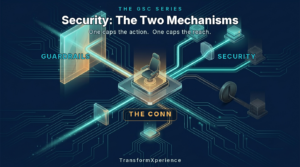
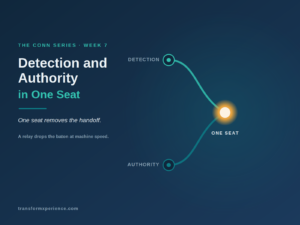
The conn is the named, accountable human who holds detection and authority in one seat, and who runs the operating model against drift.
The conn is not a role you hire for. The capacity that supports it sometimes is.
The conn is an accountability assigned within the organization’s leadership structure, not a position created only to give it a name. The right seat is the one with accountability for the affected outcome and the standing to coordinate the integrated response. Additional capacity may be necessary to support detection, technical execution, or sustained operation, but that is a separate decision.
Why Hiring the Conn Works Against the Seat
A role created to be the conn often sits outside the outcome. The leaders closest to the consequences of a drifted claims rule or a drifted pricing rule already run those operations. A new role placed beside them has to learn the operation, earn the standing to stop it, and then route every action back through the people who own it.
That adds a handoff. The conn exists to remove one: detection and authority in one seat, so there is no relay between the person who sees the drift and the person who can act on it. A hire placed between the signal and the accountable leader rebuilds the relay the conn was meant to retire. It can also delay the work. A requisition, a search, and onboarding can run for months while the automations keep running.
If you have already appointed a Chief AI Officer, that leader may be the right seat, once connected to the signal and the authority. Appointing the right existing leader to the seat is not the same as creating a role to fill it.
Hiring capacity behind the seat is different. An analyst who strengthens the signal, or an engineer who owns a control, can reduce the load on the seat without adding a relay. Decide whether you need more capacity after the seat is assigned, not instead of assigning it.
Four Decisions Come First
Standing up the conn inside the leadership you already have comes down to four decisions. Each one is concrete, and together they produce something your team can see and hold.
- Which automations need a conn. Not every automation does. The seat is for the ones that can move the business: material decisions, material money, material exposure to customers, patients, or regulators. The output is a short list, not an inventory of everything that runs.
- Who holds each seat. The seat belongs with the leader accountable for the affected outcome who has the standing to coordinate the response. Often that is the business leader closest to the consequence rather than the technology team by reflex. Where accountability spans several outcomes or functions, it may be an executive with broader authority. One person can hold the seat for several related automations, and each seat has a named backup.
- What authority the seat carries. Written down before it is needed. The conn is accountable for the integrated response and holds pre-agreed authority to invoke defined actions: pause, contain, restore a known-good state, or escalate. The teams responsible for the affected systems execute the technical changes within their assigned authority. The conn remains accountable for confirming that the response worked before normal operation resumes. Anything outside those limits, the seat convenes the people who hold that authority.
- What the seat can see and reach. The signals and controls you already run, connected to the seat through the GSC mechanisms, so material drift reaches it inside the window that matters and it can invoke a response through the teams that own each control.
Together, those decisions produce a documented accountability assignment: the covered automations, the accountable seat and its backup, its delegated authority, the signal path, and the responsible execution teams. That is the conn, stood up. Only then does the capacity question have a clear answer, because you can see what the seat needs and who already supplies it.
What It Asks of the Leader Who Holds It
The fair objection is time. Your senior leaders are already full.
Expect more attention in the first months, while thresholds are tuned and the team learns which signals matter. Once the signals, thresholds, and response paths are established and tested, the seat is designed to operate primarily through exceptions and periodic review. The sensing is instrumented, the thresholds are agreed in advance, and the authority is pre-agreed, so the holder is not watching screens, interpreting every reading, or convening a meeting to act.
The periodic reviews examine both the design and the conduct: whether the thresholds were set right, and whether the seat acted inside the window when they tripped. That keeps the load proportionate and the seat honest. And if the reviews show the load is more than the seat can carry, that is the evidence for adding capacity behind it.
Where TransformXperience Fits
TransformXperience defines which seats your material automations need, who holds each one, the authority each carries, and how the GSC mechanisms connect to it, implements those connections, and stays accountable for the parts working together until your team takes over and runs it. Where the evidence shows a real capacity gap, we say so and define the role. We architect it. You own it. You run it.
That is accountability your operation keeps after the engagement ends. A requisition can add capacity without establishing accountability. The two decisions are not interchangeable. A consulting deck can describe the seat and leave before anyone holds it. A monitoring platform can surface the signal; it cannot hold the authority to act on it.
Find Out Which Seats You Need, and Who Already Holds ThemBefore you open a requisition, start with a free 30-minute conversation. We will talk through which automations in your operation can move the business, who sees and who can act on each one today, whether a seat can be assigned within your current leadership, and whether there is a fit. To see where oversight of your AI agents sits today, the Agent Authority Assessment is seven scored questions on who notices, who can stop an agent, and who decides who needs to be told. Book a free 30-minute conversation: calendly.com/transformxperience-info/30min |