A human used to be the throttle. Someone applied the rule, caught the edge case, paused when the numbers looked wrong. That person was slow, and in one respect their slowness helped. It gave drift a place to surface.
An agent can remove the throttle. It applies what it inherited across entities and periods, at machine speed, and unless someone designs a check back in, it does not pause to ask whether the rule still fits.
The Assumption You Never Wrote Down
Every operating model runs on assumptions that were true the day they were set. The vendor is approved. The threshold is thirty days. The exception routes to the regional lead. Some of those get written down. Many do not. They live in the heads of the people who run the work, and they drift as the business changes, often with no changelog.
For years this was survivable, because a person sat between the assumption and the outcome. They knew the threshold moved to forty-five days last spring even though the procedure still says thirty. They applied the rule as the business had decided it, not only the documented one, and closed the gap by hand.
What the Agent Does With It
Hand that work to an agent and the gap can stop closing. The agent may not know the threshold moved. It reads the documented rule, or it infers a rule from historical data that already carried the drift, and then it applies that rule across cases, regions, and periods, without the person who used to correct it. That reconciliation can stop unless a replacement check is designed in.
The assumption one person adjusted case by case can now be applied at scale, consistently, faster than anyone can review. The risk is not necessarily that the model is wrong. The model may be doing exactly what it was configured to do. The risk is that what it was given had already drifted, and now that drift can run at machine speed across the book of business.
Consider an illustrative collections process. A team stopped escalating accounts at thirty days and started allowing forty-five for one important customer segment. The regional lead, who had the authority to approve that exception, made the call to protect the relationship. The decision never reached the procedure or the workflow logic. Hand collections to an agent, and it inherits the documented thirty-day rule. It applies that rule on time and at volume to every account in the segment. The customers the team was protecting start receiving escalation notices the business decided months ago not to send. No one changed the configured rule. The business rule had already changed, and the agent restored the one that was written down.
What the agent inherited: the documented 30-day escalation threshold
What the business had decided: an authorized 45-day exception for a protected segment
What automation did: enforced the stale documented rule uniformly, at scale
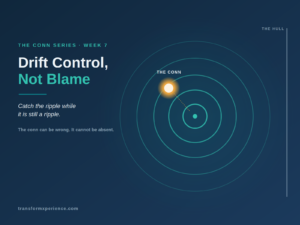
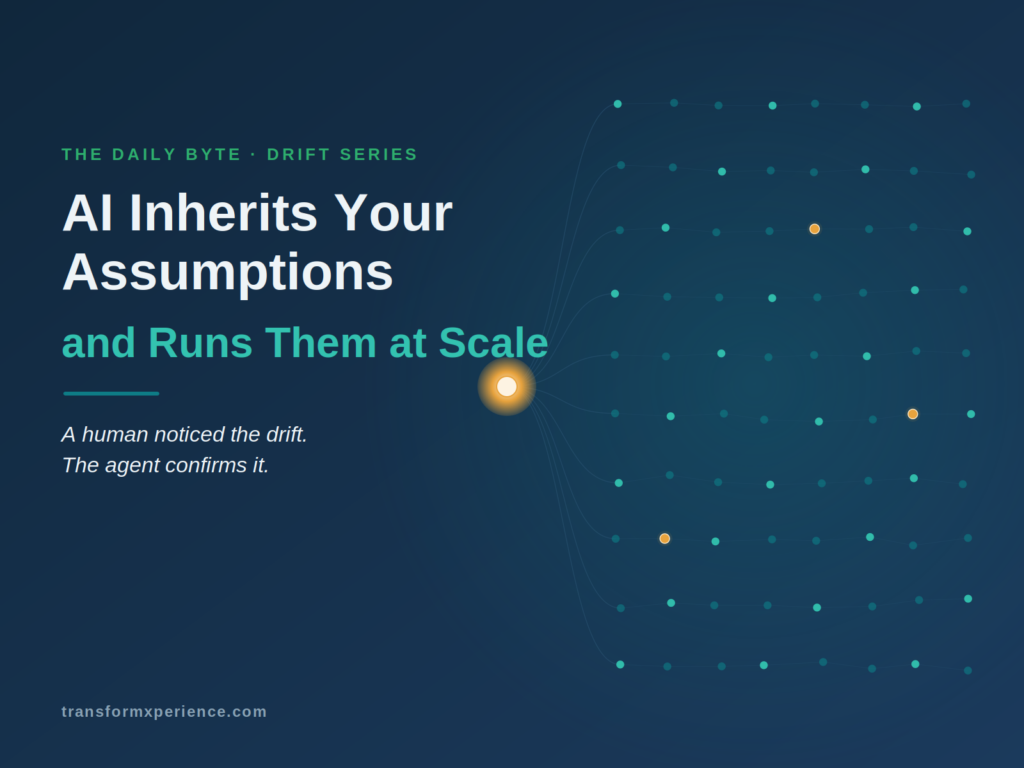
A human noticed the drift. The agent confirms it.
At human speed, drift was often slow enough that someone noticed. The status turned red. A customer complained. A number looked off, and a person went digging. With automation, an inherited assumption can run so cleanly that the output looks healthy. The dashboards stay green.
In that case the drift is not hidden because it is subtle. It is hidden because it is executing consistently, at volume, as inherited. A human noticed the drift once. The agent can confirm it thousands of times a day and report the work as done.
Where the Usual Answers Fall Short
The instinct is to add a control on the model. Monitor its outputs. Put a human in the loop. Buy a platform that flags anomalies. Each of those is worth having, and each catches real problems: performance issues, output anomalies, decisions that look wrong given the rule. What output checks alone may not catch is whether the business assumption the agent inherited is still true.
An anomaly detector tells you when the agent deviates from its pattern. It may say nothing when the agent executes a drifted pattern consistently, because consistent execution of a stale rule does not always look like an anomaly. Monitoring catches it when it is designed to, when it tests the running rule against current business intent rather than only the output against its own history. That starts with knowing what the agent inherited, which is a read of the operating layer, not only a read of the model.
Where the Conn’s Reach Has to Extend
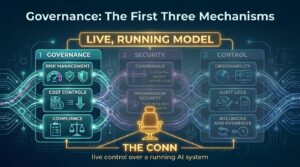
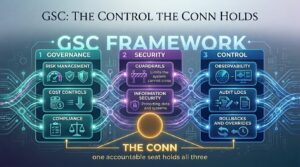
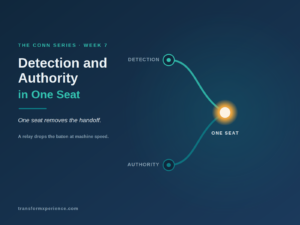
So who checks the assumptions before the agent scales them? The data team owns the pipeline. The model team owns performance. The business owns the outcome. The assumptions themselves, the quiet rules a person used to adjust, sit between the three. That is where the conn, the named, accountable seat for governing drift, has to reach.
Handing work to an automation is a handover, and it deserves the same verification as any other. Does the conn’s scope cover the assumptions this automation inherits? Could the conn see if one went stale? Could it act before the agent applies a stale rule at volume? And when the person who carried those rules stepped out of the loop, did the reasoning transfer, or only the documentation? That does not mean the conn personally reviews every threshold. It means the assumptions that matter most fall inside its scope, someone keeps them current, and the conn can act when one no longer holds.
Before You Scale It
Someone has to answer a plain question first: what is this automation about to assume, and is that still true? The AGE Framework™, our Adaptive Governance Engine, is built to make that answerable. It reads the operating layer, the system you run rather than the one you documented, and surfaces the decisions, thresholds, exceptions, and workarounds an agent would inherit, so they can be reviewed before automation applies them at scale. That review includes separating authorized business decisions from workarounds that need a second look, because what people do today is not automatically what the business has approved.
Making assumptions visible gives the conn a chance to verify them before the agent scales them. At machine speed, that chance matters. A wrong assumption that once touched a handful of cases can reach many more before the next review.
|
Before an Agent Executes Your Assumptions at Scale The AI Readiness Self-Assessment is built to show where the decisions, process rules, and exception paths in your operating layer are undocumented, out of date, or outside anyone’s defined scope, so you see what an agent would inherit before you scale it. Take the assessment on the Insights hub at transformxperience.com/insights. |