
EHR implementations are among the most complex technology programs in any industry. Multiple departments. Thousands of workflows. Clinical staff whose first obligation is patient care. Regulatory requirements that change mid-project. Vendors with their own timelines and priorities.
Many implementations run past their planned go-live dates and over budget. And the strain rarely ends at go-live. It moves into adoption and ongoing change, where it is harder to see.
When a program slips, the first explanations tend to be the technology, the vendor, or a timeline that was unrealistic from the start. Sometimes those are real. But the problems leaders can most directly control are internal: change management, scope authority, resource conflicts, oversight, and adoption.
These are five problems that can derail EHR implementations, plus a sixth that outlasts the project itself.
Problem 1: Underestimating Change Management
The technology is the easier part. Getting hundreds of clinicians to change how they document patient encounters is the hard part.
When change management is treated as an afterthought, training is compressed into the final weeks before go-live and communication is a few emails and a town hall. Then go-live arrives, physicians push back, nurses build workarounds, documentation quality drops, and throughput slows.
The fix: integrated change management from project kickoff, not bolted on at the end. A dedicated workstream with its own plan, resources, and executive sponsor. Stakeholder analysis in month one. Physician and nursing champions engaged months before go-live. Training design that starts when configuration starts, not when it ends.
Problem 2: Scope Creep Without Scope Authority
“Can we add the cardiology module while we are at it?” “The lab director wants a custom interface to the analyzer.” “Radiology will not participate unless we include their imaging integration.” Each request seems reasonable, and each requestor has a legitimate need. Together, they push the timeline and the budget past what anyone approved.
The political cost of saying no can feel higher than the project cost of saying yes. Without a seat that holds real authority over scope, decisions become negotiations, and late changes typically cost more than the same changes made early.
The fix: a change control board with real authority, and a formal impact analysis on every request: what it adds to the timeline, what it costs, and what moves to make room. Leadership decides with full information, and “not in this phase” becomes an acceptable answer.
Problem 3: Resource Conflicts With Daily Operations
Your best clinical informatics specialist is critical to the EHR program. She is also critical to daily operations. When the two conflict, operations wins, because patients still need care.
Subject matter experts are pulled in for a few hours a week, which becomes a few hours a day, which is still not enough. Testing windows land in periods that turn out not to be slow. Training sessions are cancelled because the floor is short-staffed.
The fix: dedicated allocation with backfill. If a nurse manager is critical to the program, backfill her operational role for the duration and budget for it. Build protected testing windows that operations leadership has committed to honor.
Problem 4: Vendor Dependency Without Internal Oversight
The vendor brings a methodology, templates, and experienced project managers. Its incentives still differ from yours. The vendor is accountable for contractual milestones and a declared go-live. You are accountable for a system your clinicians use and outcomes that justify the investment. Those goals overlap. They are not identical, and when they conflict, each side tends to optimize for its own.
The fix: client-side oversight with healthcare IT experience. Someone whose job is to represent your interests, push back on unrealistic timelines, and recognize when a standard configuration will not work for your workflows. This is not distrust. It is alignment.
Problem 5: Go-Live Fixation Over Adoption
Go-live is the starting line, not the finish. When it is treated as the finish, the project team disperses and leadership moves to the next priority. Meanwhile, clinicians keep backup notes on paper, workarounds harden into habit, and key features sit underused.
The fix: success measured by adoption, not deployment. Define what adoption looks like at 30, 60, and 90 days, measure it, report it, and fund an optimization phase with the resources to retrain users and refine workflows.
After Go-Live: Accountability for a System That Keeps Changing
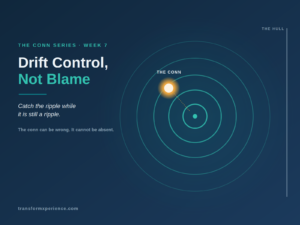
There is a sixth problem, and it outlasts the project team. The EHR you validated at go-live is not the EHR you run a year later. Templates are rebuilt. Order sets are revised. Upgrades arrive on the vendor’s schedule. Local build requests accumulate. Each change is reasonable and approved on its own. Together they can move the running system away from the one you designed, tested, and trained on.
Many health systems already have EHR change-control processes that evaluate proposed modifications. Those processes serve an important purpose. The additional question is whether anyone is accountable for the cumulative effect of approved changes on validated workflows, clinical operations, and the tools that depend on EHR data.
That question matters more now because the EHR is no longer the end of the line. Clinical AI tools sit on top of it, reading the data it captures. When the EHR changes, the tools that depend on its data may be affected, even when those tools themselves have not changed. That makes continued monitoring of their performance important.
Go-live may close the implementation project. It does not close accountability for the system that continues to change.
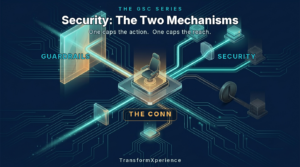
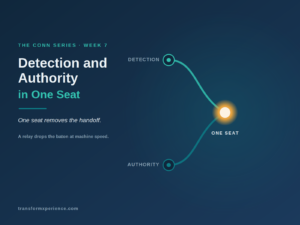
In our work, the seat that answers that question is called the conn. The conn is the named, accountable human who holds detection and authority in one seat, and who runs the operating model against drift. The conn is accountable for the integrated response and holds pre-agreed authority to invoke defined actions: pause, contain, restore a known-good state, or escalate. The teams responsible for the affected systems execute the technical changes within their assigned authority, and the conn remains accountable for confirming that the response worked before normal operation resumes. In a clinical setting, clinical decisions remain with appropriately authorized clinical leaders, and the conn’s authority to invoke containment is established within those boundaries. The Conn in Healthcare explains how that works in practice.
The Habits That Counter These Problems
The habits that counter these problems are straightforward to name and hard to sustain. Integrate change management from day one. Give scope decisions to a seat with real authority. Dedicate resources fully rather than fractionally. Keep internal oversight independent of the vendor. Measure success by adoption, not go-live. And name who answers for the running system after the project team leaves.
Together, they treat an EHR implementation as an operating-model change.
Where TransformXperience Fits
EHR implementation is not only a technology deployment. It changes how clinical operations, technology teams, vendors, and organizational leadership work together.
TransformXperience addresses the operating-model problems that cross those boundaries: decision rights, competing priorities, handoffs, and accountability for the integrated result. Our work includes designing and implementing the connections across functions and systems, then remaining accountable for those parts working together until the client’s team takes over and runs it.
For an EHR program, that means examining where implementation decisions, operational ownership, and post-go-live accountability must connect. It does not replace the EHR vendor, clinical leadership, or the organization’s established technical and clinical authorities.
Start With an Honest Look at Where You Stand
If you are planning an EHR implementation, in the middle of one that is struggling, or past go-live and unsure who answers for the system now, start with a free 30-minute conversation. We will talk through where your program is most likely to slip, who owns each seam today, and whether there is a fit.
For a self-check first, the Healthcare IT Readiness Checklist on the Insights hub scores 20 areas across strategy, technology, capability, and operations.