If you have followed this series, you have met the conn: the named, accountable seat for governing drift. Drift that is structural, not sloppy. A reach that can break at scope, visibility, authority, and handover. And automation that can shorten the window to act.
This post looks at the conn up close. Where the word comes from, what it means precisely, what it is not, and the one test that tells you whether yours is real.
The Seat Comes From the Sea
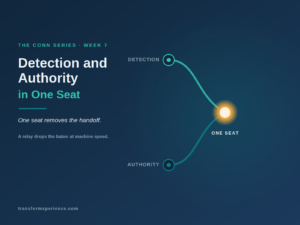
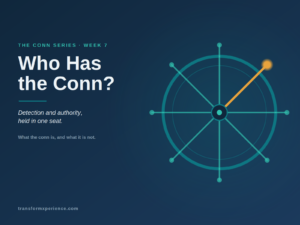
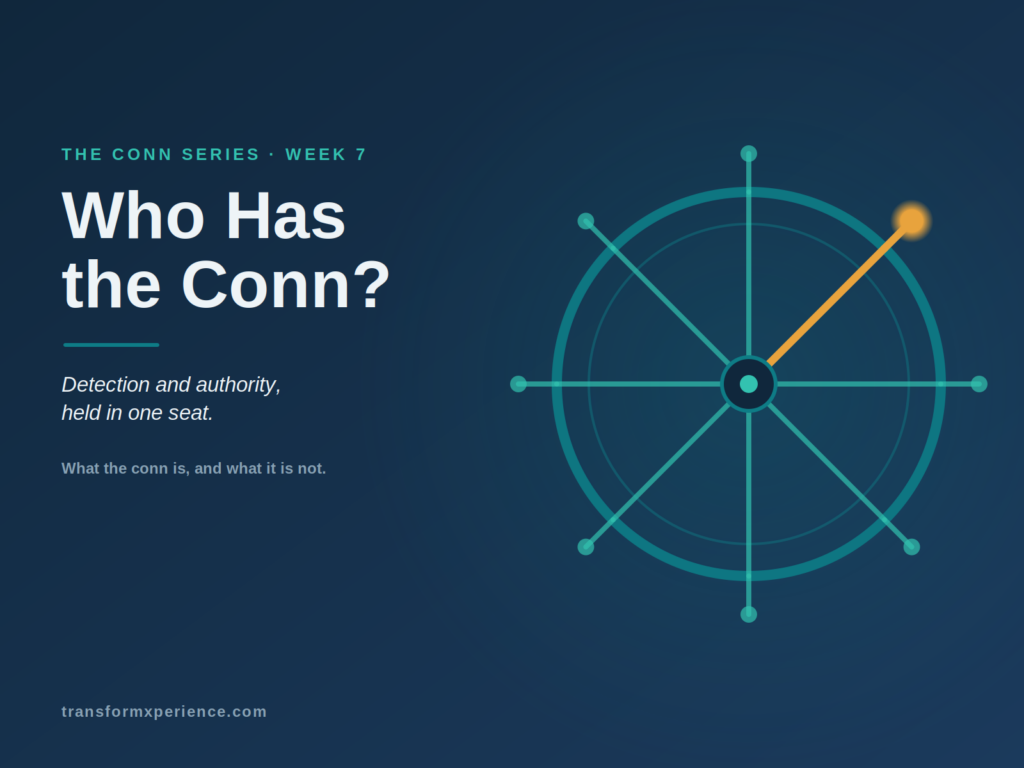
On a ship’s bridge, one person has the conn. Not the captain by default, not the whole crew. One named officer who holds active control of the vessel’s course at that moment. Whoever has the conn reads the field, calls the correction, and answers for where the ship goes. Detection and authority sit in the same seat.
And the conn is never ambiguous and never empty. It is handed over aloud, on the record, from one officer to the next, because on a ship, uncertainty about who is steering is how people die.
That handoff discipline is the model for the org version too. The conn is a seat with a named backup and a recorded handover, so it stays filled through vacations, rotations, and incidents. Never empty does not mean one person never rests. It means the seat is never vacant and never in doubt.
Now bring that onto land, into your operation. Ask who has the conn of your operating model right now, for the automation that matters most. If the answer takes more than a moment, that hesitation is worth examining. No bridge would tolerate it.
The Definition
Here is the definition, cleanly, because it is the load-bearing sentence of everything that follows.
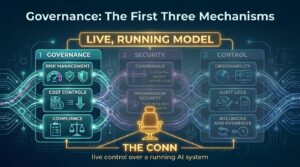
The conn is the named, accountable human who holds detection and authority in one seat, and who runs the operating model against drift.
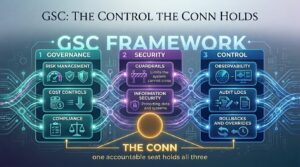
Read it slowly. Every word carries weight. Named, one person you can point to. Accountable, the distance between what you intended and what now runs is theirs. Detection and authority in one seat, the seat owns knowing when material drift appears and holds pre-agreed authority to act on it. Holding detection does not mean personally watching every screen. The sensing can be instrumented; the seat owns the signal and the decision. And running the operating model, the conn holds the AGE Framework, our Adaptive Governance Engine, and the Velocity Governance Framework steady against the forces that pull the operating model out of true.
That is the conn. Not a department. Not a dashboard. A person, with a specific accountability, who does for your operating model what the officer with the conn does for the ship: keeps it on course and owns the response when it drifts. The rest of the team still does its work. The instruments do much of the watching. The conn holds the signal and the decision.
The conn has defined authority, not unlimited authority. It does not replace your risk, legal, technology, or business leadership, and it does not hold unilateral authority over every decision. When drift is detected, the conn has the standing to pause the automation, escalate, convene the right decision-makers, and confirm the correction holds. That is the authority the seat needs, and no more.
What the Conn Is Not
The conn is easy to mishear, so let me be as clear about what it is not.
It is not a new hire. You are not posting a job for a Chief Conn Officer, and if your first instinct is to add headcount, you have misread it. The conn is an accountability you assign to a senior person who already exists in your organization.
It is not a title. It is not a nameplate on the org chart. Titles drift too. The conn is a live responsibility, held and handed over on purpose, not a permanent label someone wears to meetings.
It is not a committee. Committees have a real role: they set policy and review performance. But a committee meets on a calendar, and drift does not. Between meetings, an automation can run a drifted rule across thousands of cases. The committee sets the policy. The conn keeps the running system true to it between meetings, and brings the committee what it learned.
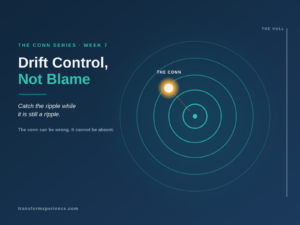
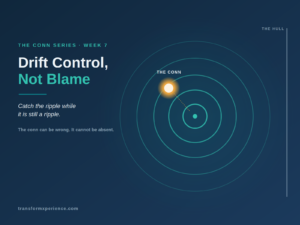
It is not blame. Assigning the conn is not choosing someone to punish when the model gets it wrong. It is the opposite. It is giving one seat the standing to catch drift while it is still small, before it becomes the failure anyone would be blamed for. Accountable here means the conn owns the response when drift appears: detection, pause, and correction. It does not mean the conn is the scapegoat for every output the system produces. That distinction gets its own post in this series, Drift Control, Not Blame.
The One Test That Settles It
If you take one test away from this, take this one. The conn is the seat that can say yes, no, or slow down when an automation is pulling the business forward. Authority to act is the test.
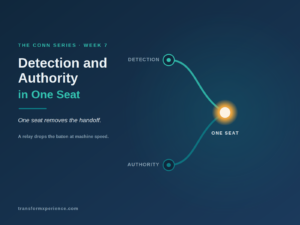
A seat that owns detection but cannot act is not the conn. A seat that can act but never learns about the drift in time is not the conn either. The seat has to hold both, or the handoff between them becomes the gap.
Picture an illustrative case. An underwriting automation keeps applying an eligibility rule that a policy change retired. Compliance sees the pattern in the numbers but cannot pause the workflow. Operations can pause the workflow but does not see the pattern until the next review. Both teams are capable, and the seeing and the acting sit in two places with a queue in between. With a conn in place, the seat owns the detection signal, holds pre-agreed authority to pause when it crosses a defined line, pauses new decisions, pulls in compliance and operations to correct the rule, and records what happened.
Who Has It Right Now?
So the question that names this series is the one to sit with. Who has the conn of your operating model right now? If you can name the seat, test that it works: that the signal arrives in time, the authority holds, and the backup can take over. If the honest answer is no one, or not sure, you have found your first piece of work.
Someone has to hold the conn. The rest of this series looks at how detection and authority work together in one seat, and why the conn is drift control, not blame.
Find Out Who Has the Conn in Your Operation Before you can assign the conn, your leadership team has to see where drift can emerge, who can spot it, who can stop it, and whether those meet in one seat. That is the work of an Executive Readiness Session, a focused working session that maps your operating model against drift and surfaces who, if anyone, holds the conn today. Book one at transformxperience.com. |