The moment you say one named person is accountable for drift, the room hears a different word. Scapegoat. You can watch it happen. Someone’s shoulders tense, because they assume the plan is to find a neck to hang the next failure on.
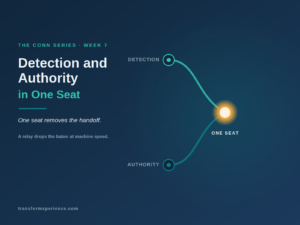
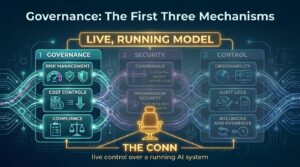
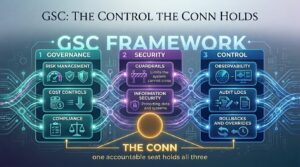
That instinct is one of the biggest reasons organizations never assign the conn, and it is exactly backwards. The conn is the named, accountable human who holds detection and authority in one seat, and who runs the operating model against drift. Naming that seat is not blame. It is the opposite of blame. This is about why, because until that objection is answered, no one competent will take the seat.
Blame Looks Backward. The Conn Looks Forward.
Start with the difference nobody draws clearly. Blame is a backward-looking act. Something failed, and you go find who is at fault. It happens after the damage, and its whole energy points at the past. The conn is a forward-looking role. Its job is to catch a gap while it is still small, in the window before it becomes the failure anyone would be blamed for.
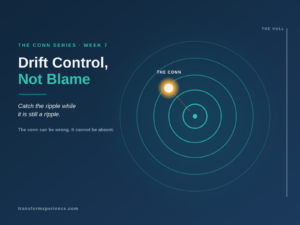
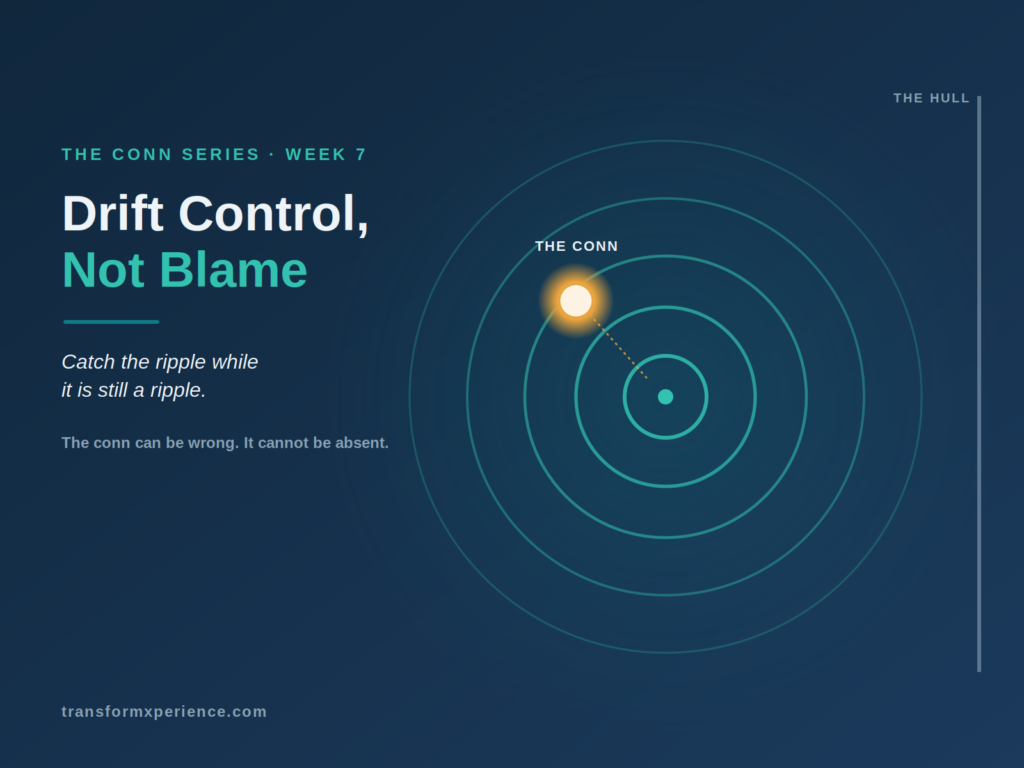
Picture drift as ripples spreading from a dropped stone. Blame arrives after the ripples have reached the hull and something has cracked. The conn watches the ripples while they are still ripples, and acts before they reach anything. Those are not two versions of the same job. They are opposite jobs, pointed in opposite directions in time. Most org charts have someone assigned to the first and few have anyone assigned to the second.
The conn can be wrong and still be doing the job. What the conn cannot be is absent.
The Conn Can Be Wrong
Here is the part that unlocks the whole thing. The conn is not judged on being right every time. The seat is judged on disciplined judgment: whether the signal met the defined trigger, whether the response was proportionate to the risk, whether the conn acted within the required window, and whether the decision was reviewed and improved afterward. A conn who makes a good-faith, proportionate pause under defined conditions is doing the job, even when later review shows the automation would have been fine. They saw a signal, they had the standing to act, and they acted. That is a healthy seat, even when the call was cautious.
The failure is not a conn who was occasionally wrong. The failure is a seat that never acts, or a seat that is empty. An organization that punishes the conn for a cautious pause will quickly have a conn who never pauses anything, which is the same as having no conn at all. If the seat has to be right every time to be safe, no one competent will sit in it.
Why Blame Culture Destroys Drift Control
This is not soft. It is mechanical. Blame and drift control cannot live in the same seat, because they pull the person in opposite directions.
If holding the conn means you own every bad outcome personally, two things happen. First, no one qualified takes the seat, so it sits empty, and you are back to the unowned drift the last several weeks were about. Second, and worse, the people who can see drift early stop surfacing it, because raising a small gap becomes a way to get blamed for it. Blame drives drift underground. It trains your best people to stay quiet until the failure is undeniable, which is precisely when it is too late and too expensive to catch.
Drift control needs the opposite. It needs a seat where surfacing a small gap early is the job, not a confession, and where a cautious pause is backed, not penalized. That safety is not a nicety. It is the operating condition that makes early detection possible at all.
Safety does not mean immunity from review. It means the review asks the right questions. Was the trigger clear? Was the response proportionate? Did the conn act inside the required window? What should the operating model learn from the signal? A healthy conn is protected from punishment for a good-faith intervention and accountable for disciplined use of the authority.
What This Is Not
Be clear, because this cuts both ways. Separating the conn from blame does not mean no one is accountable. That is the other failure, the diffuse, no-fault culture where drift belongs to everyone and therefore to no one. The conn is accountable, sharply. Accountable for watching, for acting, for initiating the response, for ensuring the issue moves to resolution, and for keeping the seat filled and handed over cleanly. The conn is not necessarily the person who owns every technical, policy, or business correction. What the conn is not is culpable for every output the system produces. Accountable for the response, not the scapegoat for the outcome.
The two most common failures sit on either side of this line: the organization that blames a person for the machine, and the organization that blames no one for anything. The conn is the narrow, correct path between them. The conn is neither a scapegoat nor an untouchable role. It is a named, protected, and disciplined authority for detecting and controlling drift before it becomes damage.
The Reframe for the Executive
So when you appoint the conn, understand what you are doing. You are not selecting a fall guy for the next incident. You are appointing the one person whose entire job is to protect the organization from drift, and you are giving them two things that make that possible: the authority to act, and the safety to act early without being punished for it. Framed that way, the seat stops being a liability nobody wants and becomes a mandate your strongest operator would take. That reframe is most of the battle.
Design the Seat
The model does not break because a conn makes a cautious, good-faith call that later proves unnecessary. It breaks when the seat is empty, afraid, or designed so that no one can use its authority without personal risk.
Design the seat so that holding the conn is a form of protection, for the organization and for the person in it, and you have something durable. Design it as a place to assign blame, and you have built an empty chair with a target painted on it.
| Design the Seat So It Holds Accountability, Not Blame An Executive Readiness Session defines the conn for your operation: the seat, its authority, its triggers, and the safety it needs to surface drift early instead of hiding it. Book one at transformxperience.com. |